


• Why Plant-Based?
    • Overview
    • Sustainability
    • Better health
    • Compassion for animals
  • Resources
    • Virtual speaker series
    • Speakers program
    • Pamphlets
  • Blog
  • About Us
    • Who we are
    • Contact us
  • How to Help
    • Join us
  • Donate
EarthsaveEarthsave
EarthsaveEarthsave
  • Why Plant-Based?
    • Overview
    • Sustainability
    • Better health
    • Compassion for animals
  • Resources
    • Virtual speaker series
    • Speakers program
    • Pamphlets
  • Blog
  • About Us
    • Who we are
    • Contact us
  • How to Help
    • Join us
  • Donate

Compassion for Animals

Animals are living, breathing and feeling beings, just like us. We all share the same love of life and the desire to avoid pain. Many of us consider animals like cats and dogs to be family members. Some of us might even describe ourselves as “animal lovers.”

Yet, we treat farmed animals as if they were mere objects or machines that exist for our own use. We bring them into the world only to be brutally killed at a small fraction of their natural lifespans, so that humans can eat their flesh and reproductive products.

Worldwide, over 70 billion land animals are raised and killed every year,1 including over 800 million in Canada.2 These numbers do not include the trillions of aquatic animals killed each year.3
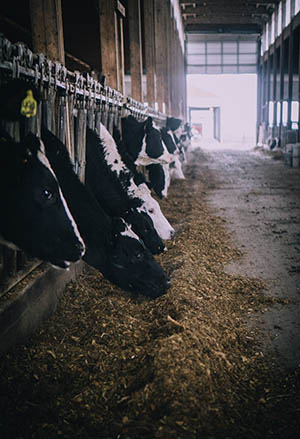

We all share the same love of life and the desire to avoid pain.

The way that the vast majority of farmed animals are treated would be considered torture if it were done to humans. The idea that animals can be farmed “humanely” is a myth designed to make us feel better about using animals. There is no humane way to kill someone who does not want to die. Nothing humane happens in a slaughterhouse.

There is no humane way to kill someone who does not want to die.

Even animals who are not raised for meat suffer greatly. For example, in order to produce milk, a dairy cow must give birth to a calf each year. She carries a single calf for 9 months. After birth, her calf is cruelly removed from her almost immediately so that her milk can be taken for human consumption. The separation causes extreme distress to both mother and calf. Each male calf is placed alone in a small crate until he is slaughtered at about 4 months old, for veal. A female calf is more likely to be raised to suffer the same fate as her mother: she will be kept pregnant on an almost constant basis, repeating the process of giving birth and having her calf taken away several times until her milk production slows, at which point she too is slaughtered. This process is inherently miserable.

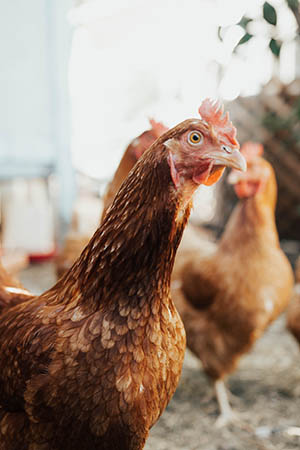
The egg industry is similarly cruel, treating hens as nothing more than egg machines. An egg-laying hen is slaughtered at a small fraction of her natural lifespan when her egg production slows. And for every hen raised to lay eggs, there is on average one male chick who was killed shortly after hatching, since raising roosters is not profitable. This means that millions of male chicks are killed each year, typically by being thrown alive into grinders.

All of this is totally unnecessary, as we can live happy and healthy lives on a plant-based (vegan) diet.

References

  1. https://faunalytics.org/global-animal-slaughter-statistics-and-charts/
  2. https://www.animaljustice.ca/blog/canada-slaughtered-834-million-animals-in-2019
  3. Mood, A.; P. Brooke. “Estimating the number of fish caught in global fishing each year” (PDF). fishcount.org.uk. Retrieved 8 April 2014.

Photo credits

  1. Photo by Amber Kipp on Unsplash
  2. Photo by Marvin Meyer on Unsplash
  3. Photo by William Moreland on Unsplash
Donate

Recent Posts

  • The Plant-Based Cities Movement: Taking climate action to the municipal level
  • Eating meat leads to longer lives? Beware poorly designed studies with even more poorly interpreted results.
  • Corn chips walking: How the overuse of corn in animal agriculture is devastating our environment

Follow us

Categories

  • Blog

© 2026 · Earthsave Canada.