




Whether you’re a long time vegan or just starting out, finding and ensuring your wares and recipes are animal-free is a frequent part of life. Thankfully, we have this handy thing called the world wide web to help us navigate this lifestyle.
There are many ways to improve your search results to better cater to a vegan lifestyle. Whether you’re looking for food products, recipes, home goods, clothing, or even attractions, by optimizing your search engine results you’ll be able to navigate the web faster and with better precision. Search engines are no stranger to the increase in vegan searches over the last few years. In fact, plant-based was the top dietary trend on google in Canada in 2019.
Search engines offer the ability to tailor results to vegan searches in several ways. These tips are generally for using Google but can be applied on other websites or even secondhand marketplaces. If you use the Google app on an Android phone, you can specify your ‘feed’ to have vegan-only recipe results using the steps outlined here.
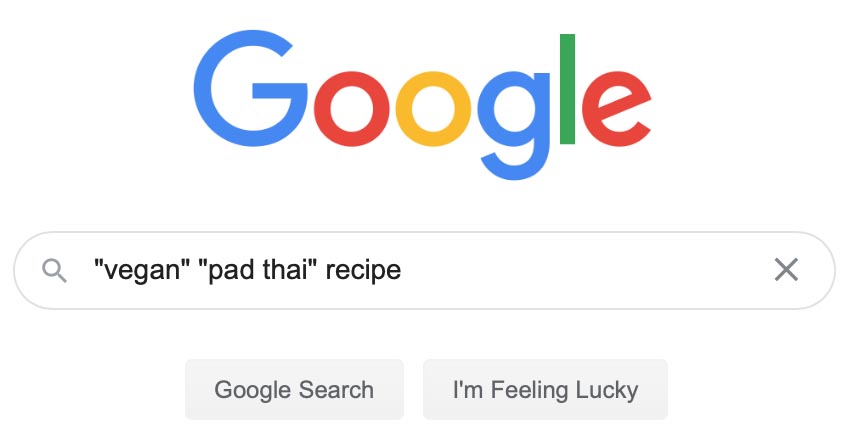
By purposely including or excluding certain terms from your search, you can better cater the results to vegan desires. To include specific terms, put them in the search bar in quotations (e.g. “vegan” pad thai) to ensure that exact phrases are contained within the search results. To exclude specific terms, such as materials that are derived from animals, write the word with a dash before it (e.g. -honey). This will omit results with that term in the search.
Some examples of popular exclusions for clothes are: -merino, -wool -leather, -cashmere, and -silk . Helpful inclusion examples are “vegan” “synthetic” “faux” and “polyester”. As with food and other purchases, many clothing items that are indeed vegan don’t use that term to describe the product, so by including other words like “synthetic”, you can widen your scope of options while still ensuring no animals were used in the making of that product.
Some searches are especially tricky, as some vegan products use terms paired together such as “synthetic down” or “faux suede,” so keep this in mind when including and excluding phrases from your search terms and adjust accordingly if you’re not getting satisfactory results. If I were looking for a new comforter for example, I’d likely search the following: synthetic duvet -feather -goose.
The same concept of inclusion or exclusion can be applied to recipes, online food shopping, and restaurants. Some popular inclusions for recipes and restaurants include “plant-based” “vegan” “dairy-free” “egg-free” “allergen free”.
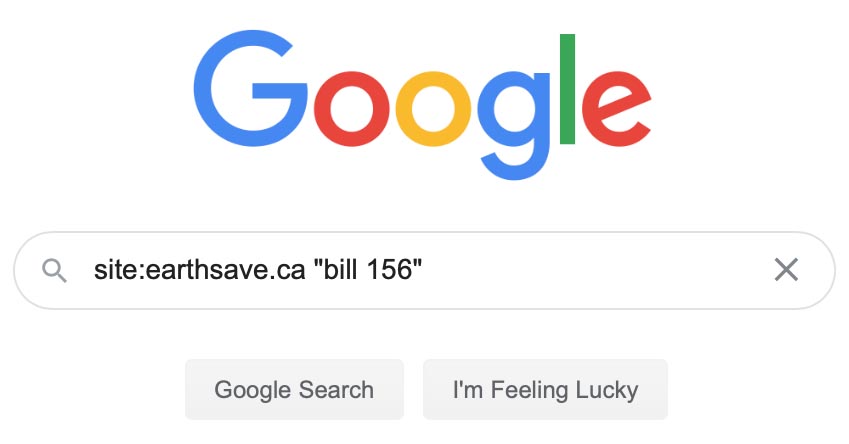
If you want to search only within a certain website, start the search with site:website, as shown below.
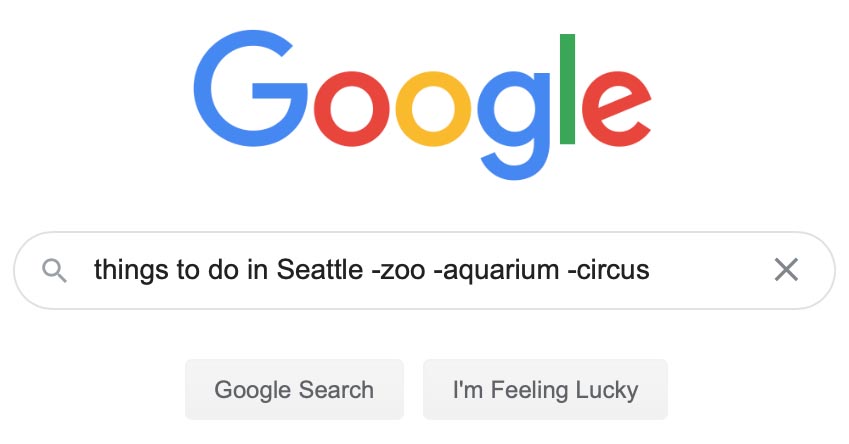
Lastly, these search tips can be especially useful when looking for attractions locally or while travelling to avoid visiting places that exploit animals. Excluding terms like –zoo, -aquarium, -petting -zoo, -farm and -circus can be helpful in this context.
We hope you try out these tips when searching online, and if you find them helpful, consider sharing this blog post so more people can find the vegan goods they’re looking for.
Photo by Andrea Piacquadio from Pexels