


Canada is a land of incredible wealth and abundance. Giant houses, fancy cars, smart phones, computers, iPads. Our land stretches for thousands upon thousands of miles. We have recreational opportunities galore. There is more fresh water here than in any other country in the world. Canada is a breadbasket to the world. And we have way more poo per capita than almost any other country in the world!
Individual Canadians probably don’t produce more sewage than people in other countries. Rather, it is our farmed animals who do. North American farmed animals – cows, pigs, chickens together – generate about 6000 pounds of manure for every woman, man and child on the continent. In the dung world, we are about as rich as rich can be.
Canadians eat more meat than they did in the past. We eat something like twice as much per person as we did in 1950; four times more than we ate in 1900. And there are many more of us now than were alive then. Second, these days we ‘raise’ most of our farmed animals on factory farms.
According to figures from the US Department of Agriculture, over 70 percent of cows, 98 percent of pigs, 98 percent of chickens ‘raised’ to produce eggs and almost 100% of chickens and turkeys ‘raised’ for meat are raised on factory farms. The figures are undoubtedly similar in Canada. Each farm has thousands of animals living in close quarters and producing tons of manure. And because of the way it’s handled, the manure is far bulkier than it was in years past.
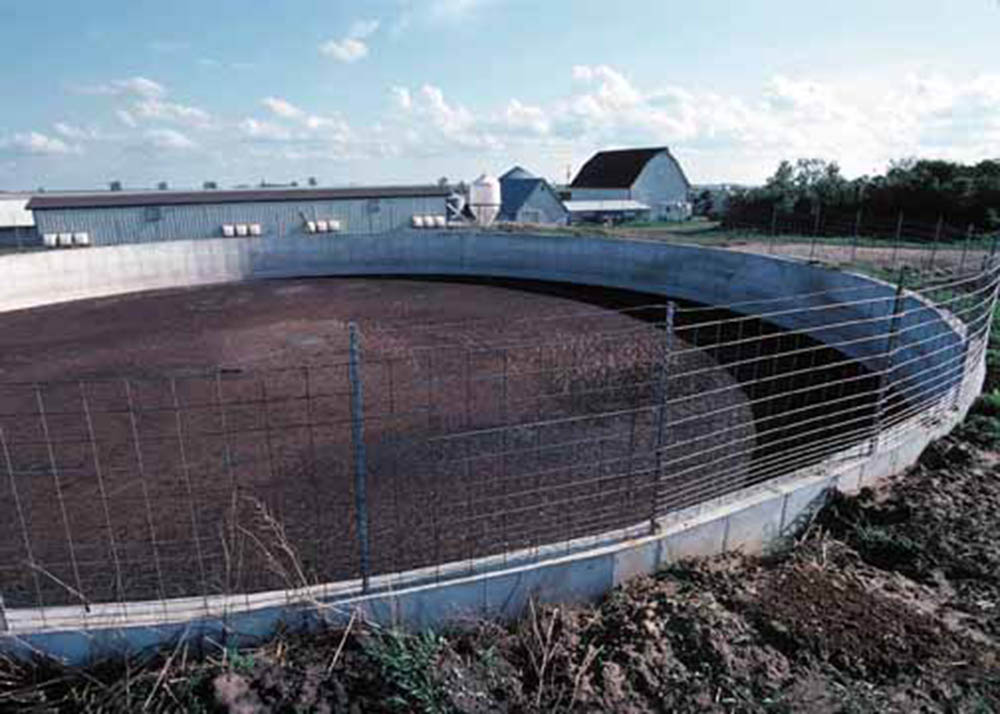
‘Modern’ hog barns, for example, use a liquid manure handling system. They liquefy the solid pig waste by mixing it with water until it is a slurry. The slurry is then pumped into holding ponds before it is hauled off for use as fertilizer or who knows what. While a ton of this liquid defecant is actually mostly water, it is much nastier than the manure it came from.
Bacteria thrive in the stuff, generating enormous amounts of ammonia and of global warming-accelerating methane. It is extremely hard to compost. Sometimes this liquid manure leaches into the ground water. The people of Walkerton, Ontario can attest to the deadly consequences of that.
Even when the stuff doesn’t get into the ground water, it can be a very big problem. Fumes from the holding ponds have poisoned people. A famous example was in Paulding, Ohio, some 15 years ago. As the Cleveland Plain Dealer reported, people suffered brain damage and worse because of hydrogen sulfide emanating from the bubbling lagoons blowing into their homes. Tests in Iowa routinely show ammonia concentrations well above the allowable limit for human health – sometimes exceeding that limit by more than ten times. Unfortunately, data on the Canadian situation seem not to be available but, given the similar practices here, the odds are things are just as bad.
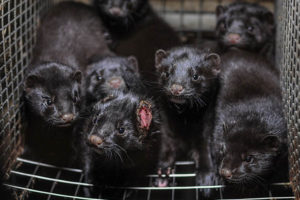
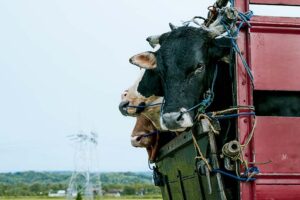
And think of what the poor innocent animals are going through! Living in close quarters, in cages or in pens, the animals on these factory farms lead short, hellish lives. Often confined to spaces little larger than their bodies, most cannot move around and sometimes they cannot even lie down. Billions upon billions of animals are forced to live like this. They live mired in manure.
Please consider all of this the next time you think about putting a pork chop, chicken tender, steak or egg on your plate.